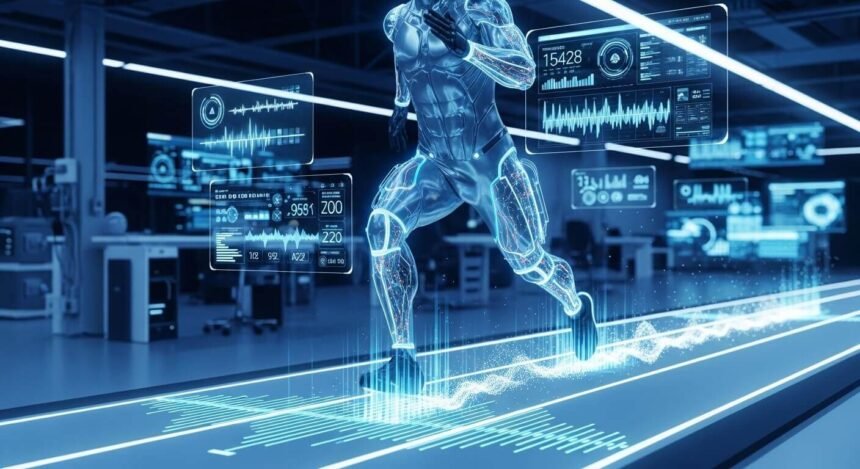
In the rapidly evolving landscape of athletic performance, a groundbreaking innovation is reshaping how athletes train, compete, and push the boundaries of human potential. Harmonicode sport represents the convergence of harmonic physics, advanced biomechanics, and intelligent technology, creating an entirely new paradigm for sports performance optimization. This revolutionary system isn’t merely another fitness trend or wearable device; it’s a comprehensive approach to understanding and enhancing the fundamental rhythms that govern human movement.
- Understanding the Science Behind Harmonicode Sport
- Core Principles: Frequency, Oscillation, and Resonance
- The Technology Powering Harmonicode Sport
- Transforming Training Through Personalization
- Injury Prevention Through Movement Analysis
- Applications Across Multiple Sports Disciplines
- The Gamification Element: Making Training Engaging
- Implementation: Getting Started with Harmonicode Sport
- The Future of Harmonicode Sport: Emerging Innovations
- Addressing Common Questions About Harmonicode Sport
- Practical Benefits: What Athletes Can Expect
- Making the Investment: Cost Considerations and Value
- FAQs
- Conclusion
Understanding the Science Behind Harmonicode Sport
The foundation of harmonicode sport lies in the recognition that every athletic movement follows measurable patterns and frequencies. Whether a runner’s stride, a swimmer’s stroke, or a basketball player’s jump, these motions operate according to natural rhythmic principles that can be analyzed, optimized, and perfected. By combining harmonic physics with biomechanical analysis, this innovative system identifies the unique movement signatures of individual athletes and provides actionable insights to enhance performance while minimizing injury risk.
The term itself merges “harmony” representing the natural rhythm and balance of physical movement, with “code,” signifying the underlying digital frameworks and algorithms that decode these patterns. This synthesis creates a powerful tool that transforms athletic training from intuition-based methods to precision-driven science.
Core Principles: Frequency, Oscillation, and Resonance
Three fundamental concepts drive the effectiveness of harmonicode sport: frequency, oscillation, and resonance. Understanding these principles is essential to grasping how this technology revolutionizes athletic performance.
Frequency refers to the rate at which movements repeat within a given timeframe. For instance, a sprinter’s stride frequency directly influences their speed and efficiency. By identifying optimal frequency ranges for specific movements, athletes can adjust their techniques to maximize power output while conserving energy. Research within the harmonicode sport framework has shown that even minor frequency adjustments can yield significant performance improvements.
Oscillation focuses on the smooth, wave-like flow of movements. In sports, oscillatory motion represents the quality and fluidity of athletic actions. When movements exhibit clean oscillation patterns, athletes expend less energy and maintain better endurance. The harmonicode sport system tracks these patterns in real-time, identifying disruptions that indicate inefficiency or potential injury risk.
Resonance represents the sweet spot where an athlete’s movements align perfectly with their body’s natural frequencies. When athletes achieve resonance, they amplify their power output while minimizing wasted energy. This principle explains why certain athletes seem to move effortlessly they’ve intuitively found their resonant frequency. Harmonicode sport makes this optimization accessible to all athletes through data-driven analysis.
| Core Principle | Definition | Athletic Benefit | Measurement Method |
|---|---|---|---|
| Frequency | Rate of movement repetition | Optimized speed and power | Stride rate, stroke count per minute |
| Oscillation | Smooth flow of motion | Enhanced endurance, reduced fatigue | Motion smoothness, wave pattern analysis |
| Resonance | Natural body rhythm alignment | Maximum efficiency, amplified performance | Harmonic frequency matching |
| Biomechanics | Study of body movement mechanics | Improved technique, injury prevention | Joint angles, force plate data |
The Technology Powering Harmonicode Sport
Modern harmonicode sport systems rely on sophisticated technological components that work seamlessly together to provide comprehensive performance insights. Wearable sensors form the foundation of data collection, tracking everything from muscle activation and joint movement to heart rate variability and even brainwave activity. These devices continuously monitor physiological metrics, creating detailed profiles of how athletes’ bodies respond to training stimuli.
Advanced analytics platforms process this collected data using artificial intelligence and machine learning algorithms. These systems identify patterns and correlations that would remain invisible to human observation alone. The AI doesn’t simply record data; it interprets it, providing personalized recommendations tailored to each athlete’s unique biomechanical signature.
Real-time feedback mechanisms represent another crucial technological component. Athletes receive immediate insights during training sessions, allowing them to adjust their technique on the fly. This instant feedback loop accelerates learning and skill acquisition significantly compared to traditional coaching methods that rely on post-session video analysis.
Biofeedback and neurofeedback technologies add another dimension to harmonicode sport by incorporating mental state optimization. These tools help athletes understand and control their cognitive performance, managing focus, stress, and mental energy to achieve peak states during competition.
Transforming Training Through Personalization
Perhaps the most significant advantage of harmonicode sport is its ability to create truly personalized training programs. Traditional athletic training often relies on generalized protocols designed for average athletes. While these methods provide a baseline, they fail to account for individual variations in biomechanics, recovery capacity, and movement patterns.
Harmonicode sport eliminates this one-size-fits-all approach by building custom training blueprints based on individual data. A runner, swimmer, and boxer training within the same facility would receive completely different protocols, each optimized for their sport’s specific demands and their unique physical characteristics. This personalization extends beyond exercise selection to include timing, intensity, and recovery recommendations.
The system continuously adapts these programs based on ongoing performance data. If an athlete shows signs of fatigue or movement quality degradation, the training protocol automatically adjusts to prevent overtraining and reduce injury risk. This dynamic responsiveness creates a sustainable path to long-term athletic development.
Injury Prevention Through Movement Analysis
One of harmonicode sport’s most valuable contributions to athletics is its sophisticated approach to injury prevention. Traditional methods often address injuries after they occur, focusing on rehabilitation rather than prevention. Harmonicode sport flips this paradigm by identifying movement inefficiencies and imbalances before they cause harm.
The system detects subtle changes in movement patterns that indicate developing problems. For example, if a runner’s stride rhythm begins shifting asymmetrically, this might signal muscular imbalance or fatigue that could lead to injury if left unaddressed. Coaches receive immediate alerts about these irregularities, enabling proactive interventions through technique adjustments or targeted strengthening exercises.
By maintaining movements within optimal harmonic ranges, athletes naturally reduce stress on joints, tendons, and ligaments. This preventive approach proves especially valuable for high-impact sports where repetitive stress injuries commonly derail athletic careers.
Applications Across Multiple Sports Disciplines
The versatility of harmonicode sport makes it applicable to virtually every athletic discipline. In endurance sports like running, cycling, and swimming, the system monitors biomechanics, heart rate, and muscle engagement to help athletes maintain optimal performance while avoiding overexertion. Distance runners benefit from stride optimization that improves economy, while swimmers receive feedback on stroke efficiency and breathing patterns.
Team sports such as football, basketball, and soccer leverage harmonicode sport to improve both individual performance and team coordination. The system analyzes agility, reaction time, and movement precision, providing insights that enhance on-field decision-making and reduce collision-related injuries.
Combat sports and gymnastics benefit particularly from the resonance optimization aspects of harmonicode sport. These disciplines demand explosive power combined with precise control exactly the characteristics enhanced by harmonic movement analysis. Martial artists learn to maximize striking power through optimal timing and body mechanics, while gymnasts perfect their routines by achieving flawless movement rhythm.
The Gamification Element: Making Training Engaging
Beyond pure performance optimization, harmonicode sport incorporates gamification elements that transform training from a solitary grind into an engaging, interactive experience. Athletes can track their progress through visual dashboards that display improvement in various metrics. This data visualization makes abstract concepts like movement efficiency tangible and motivating.
The competitive aspect adds another layer of engagement. Athletes can challenge friends, join virtual teams, or compete globally through the platform. These social features build community while maintaining motivation through friendly competition. Every workout session becomes an opportunity to improve personal scores and climb leaderboards.
Achievement systems reward consistency and progress, providing positive reinforcement that helps athletes maintain long-term commitment to their training programs. This psychological component addresses one of fitness’s greatest challenges sustaining motivation over time.
Implementation: Getting Started with Harmonicode Sport
Adopting harmonicode sport doesn’t require complete training overhaul. Athletes can begin by integrating basic wearable sensors that track fundamental movement metrics. These entry-level devices provide valuable insights into frequency patterns and movement efficiency without overwhelming users with excessive data.
As familiarity grows, athletes can expand their sensor suite to include more sophisticated monitoring equipment. Advanced implementations might incorporate force plates for jump analysis, pressure-sensitive insoles for gait assessment, or EMG sensors for detailed muscle activation tracking.
Working with coaches trained in harmonicode sport principles maximizes the system’s benefits. These professionals understand how to interpret the complex data streams and translate them into practical coaching cues. They bridge the gap between raw numbers and meaningful performance improvements.
The Future of Harmonicode Sport: Emerging Innovations
The trajectory of harmonicode sport points toward even more sophisticated applications as technology continues advancing. Virtual reality integration promises to revolutionize training by providing immersive simulations where athletes can practice optimal movement patterns in controlled digital environments. These VR systems will overlay real-time harmonic data onto the virtual experience, creating powerful learning tools.
Artificial intelligence capabilities will expand beyond current analysis functions to become true virtual coaching assistants. These AI coaches will understand individual athletes deeply enough to provide motivation, adjust training on the fly, and even predict performance outcomes with remarkable accuracy.
Collaborative training features will enable athletes and coaches separated by geography to work together seamlessly. Remote harmonicode sport sessions will feel as interactive and productive as in-person training, democratizing access to elite coaching expertise.
Addressing Common Questions About Harmonicode Sport
Many athletes wonder whether harmonicode sport benefits only elite performers or if recreational athletes can also leverage the technology. The answer is emphatically that this system serves athletes at every level. While professional teams might deploy comprehensive sensor arrays and full-time data analysts, amateur athletes gain tremendous value from even basic harmonic principles applied through consumer-grade wearables.
Another common question concerns the scientific validity of harmonicode sport. The system rests firmly on established principles from biomechanics, physics, and sports science. Research in kinesiology increasingly supports the harmonic approach to movement optimization, with studies demonstrating measurable performance improvements when athletes train according to their natural movement frequencies.
Athletes also frequently ask whether the technology could replace traditional coaching. The answer is no, harmonicode sport augments rather than replaces human expertise. The best results come from combining technological insights with experienced coaching judgment. Technology provides objective data, while coaches supply context, motivation, and strategic guidance.
Practical Benefits: What Athletes Can Expect
Athletes implementing harmonicode sport consistently report several tangible benefits. Performance metrics typically improve within weeks as movements become more efficient and better aligned with natural body rhythms. This efficiency translates to increased speed, power, and endurance across all athletic activities.
Recovery times often decrease as training protocols become better calibrated to individual capacity. The system’s ability to detect early fatigue signs prevents overtraining, allowing athletes to maintain consistent training volumes without excessive soreness or prolonged recovery needs.
Perhaps most importantly, injury rates decline significantly. By maintaining optimal movement patterns and identifying problems before they escalate, harmonicode sport helps athletes stay healthy and available for competition the single most important factor in athletic success.
Making the Investment: Cost Considerations and Value
While implementing comprehensive harmonicode sport systems requires financial investment, the technology has become increasingly accessible. Entry-level wearables with basic harmonic tracking capabilities cost less than premium running shoes, making the technology available to budget-conscious athletes.
Mid-range systems offering more sophisticated analysis and feedback typically align with the cost of monthly gym memberships, representing reasonable investments for serious amateur athletes. Professional-grade implementations with complete sensor suites and dedicated analytics platforms justify their higher costs through the competitive advantages they provide.
When evaluating the investment, athletes should consider not only the direct performance benefits but also the injury prevention value. A single prevented injury that might otherwise sideline an athlete for months makes the technology investment worthwhile many times over.
FAQs
Q: What is Harmonicode Sport?
A: Harmonicode Sport is a performance system that analyzes movement frequencies, biomechanics, and rhythm to optimize athletic efficiency.
Q: How does Harmonicode Sport improve performance?
A: It enhances movement patterns, reduces wasted energy, and increases speed, power, and endurance using real-time biomechanical data.
Q: Is Harmonicode Sport suitable for all athletes?
A: Yes. Both professional and recreational athletes can benefit from personalized training insights and injury-prevention tools.
Q: What technology powers Harmonicode Sport?
A: Wearable sensors, AI-driven analytics, neurofeedback, and real-time monitoring tools form the core technology.
Q: Can Harmonicode Sport help prevent injuries?
A: Absolutely. Detecting movement imbalances early reduces the risk of strain, overuse injuries, and mechanical inefficiencies.
Conclusion
Harmonicode sport represents far more than incremental improvement in sports technology; it’s a fundamental reimagining of how we understand and optimize human athletic performance. By decoding the natural rhythms that govern movement and providing tools to perfect these patterns, this revolutionary system opens new frontiers in what athletes can achieve.
Whether you’re a professional competitor seeking marginal gains that separate podium finishes from also-ran performances or a recreational athlete simply wanting to move better and stay injury-free, harmonicode sport offers valuable insights and practical tools. The fusion of harmony and code creates something greater than either component alone, a comprehensive system that respects both the art and science of athletic movement.
As technology continues evolving and our understanding of biomechanics deepens, harmonicode sport will undoubtedly advance further. Athletes who embrace this approach position themselves at the forefront of sports innovation, gaining competitive advantages while training smarter and more sustainably. The future of athletic performance has arrived, and it moves to the rhythm of harmonicode sport.